Doctrinal Formation at the Council of Nicaea (325 AD)
At the Council of Nicaea, Christian doctrine was formally clarified and unified, establishing foundational beliefs about the nature of Christ, the authority of the Church, and the theological framework that continues to define Christianity today.
Doctrinal Authority and the Role of Bishops
The process of doctrinal formation at Nicaea also elevated the role of bishops as guardians of orthodox belief. By participating in collective theological decision-making, bishops were no longer merely regional teachers but became authoritative interpreters of doctrine within a unified Church. This reinforced the idea that doctrinal truth was preserved through apostolic succession and communal discernment rather than individual interpretation.
The council’s decisions emphasized that theological authority resided within the gathered episcopate. This understanding strengthened ecclesiastical unity and provided a mechanism for addressing future doctrinal controversies. As a result, the Church developed a stable framework in which doctrine could be defended, transmitted, and protected across generations.
Language, Precision, and Theological Clarity
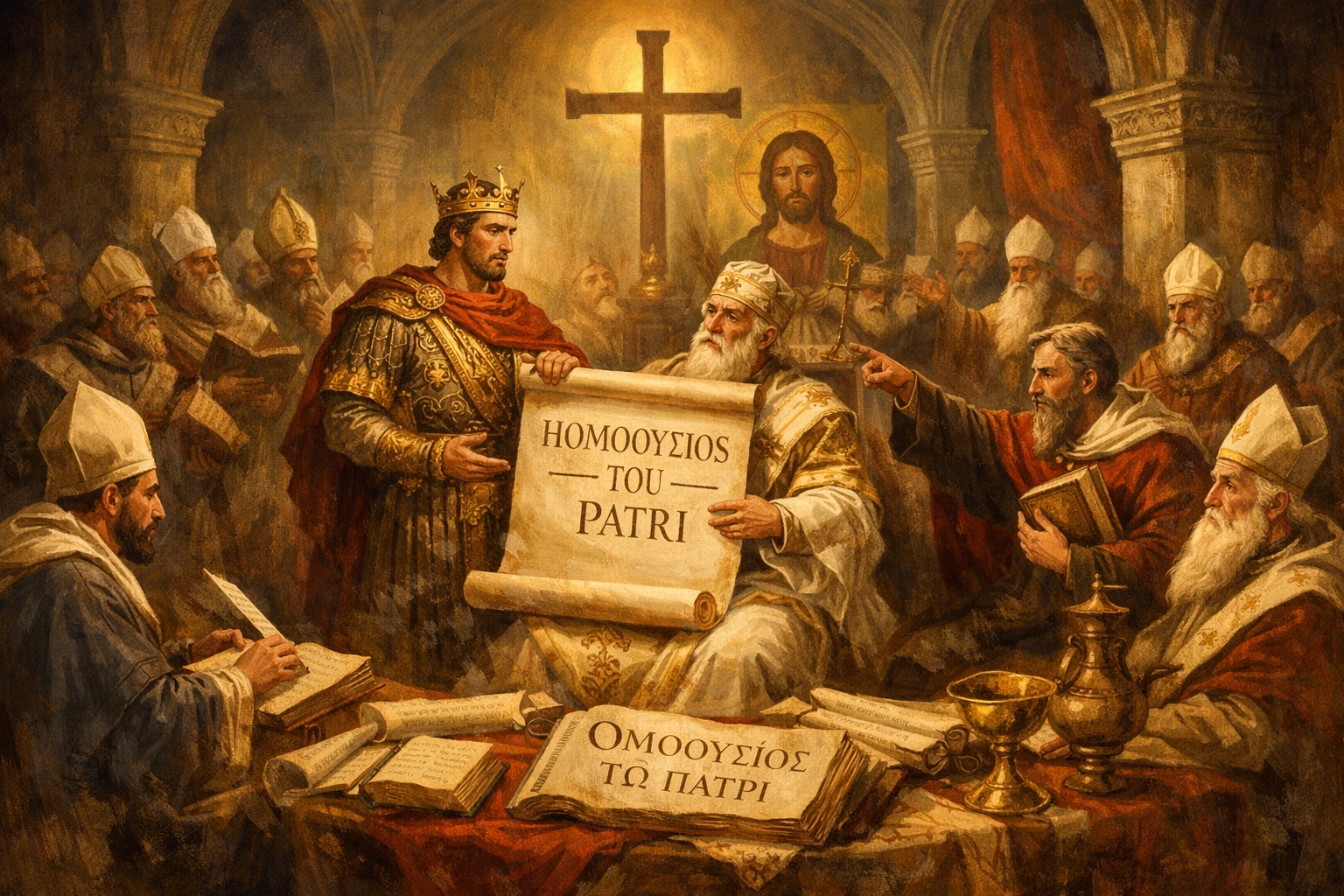
One of the defining features of doctrinal formation at Nicaea was the careful use of theological language. Terms such as homoousios were chosen with precision to convey complex theological realities in unambiguous ways. This deliberate choice of language reflected a growing awareness that doctrine required clarity to prevent misinterpretation and division.
The council’s theological vocabulary became a reference point for later Christian thought. By defining belief through precise terminology, Nicaea established a theological grammar that continues to shape Christian discourse. This emphasis on clarity ensured that doctrine could be consistently taught and understood across diverse cultural and linguistic contexts.
Unity Through Shared Confession
The adoption of a unified creed fostered a sense of collective identity among Christian communities. By professing the same doctrinal statements, believers across the Roman world were bound together through shared confession rather than local custom. This contributed to the emergence of Christianity as a universal faith with a common theological foundation.
Shared doctrine functioned not only as belief but as practice. The public recitation of creedal statements reinforced communal belonging and theological continuity. In this way, doctrinal formation at Nicaea shaped both belief and worship, integrating theology into the lived experience of the faithful.
Influence on Later Councils and Christian Thought
The conciliar model established at Nicaea became a precedent for addressing theological questions in subsequent centuries. Later ecumenical councils followed the same approach of collective deliberation, debate, and consensus-building. This process allowed Christian doctrine to develop while remaining anchored in foundational principles defined at Nicaea.
Theological debates concerning the Trinity, Christology, and ecclesiology all drew upon the doctrinal framework established in 325 AD. The Council of Nicaea thus served as a reference point for both continuity and development within Christian theology.
Enduring Theological Legacy
The doctrinal formation achieved at the Council of Nicaea continues to shape Christian identity in the modern world. Core theological concepts articulated at the council remain central to Christian belief across denominations. Whether expressed in liturgy, catechesis, or theological reflection, the influence of Nicaea is unmistakable.
By providing a shared doctrinal foundation, the council ensured that Christianity could endure doctrinal challenges while maintaining unity. The legacy of Nicaea demonstrates how defined belief, articulated through communal authority, became a cornerstone of Christian tradition and continuity.