Main Decisions of the Council of Nicaea (325 AD)
The First Council of Nicaea established the foundational doctrines of Christianity, resolved major theological disputes, and shaped the structure of the early Church.
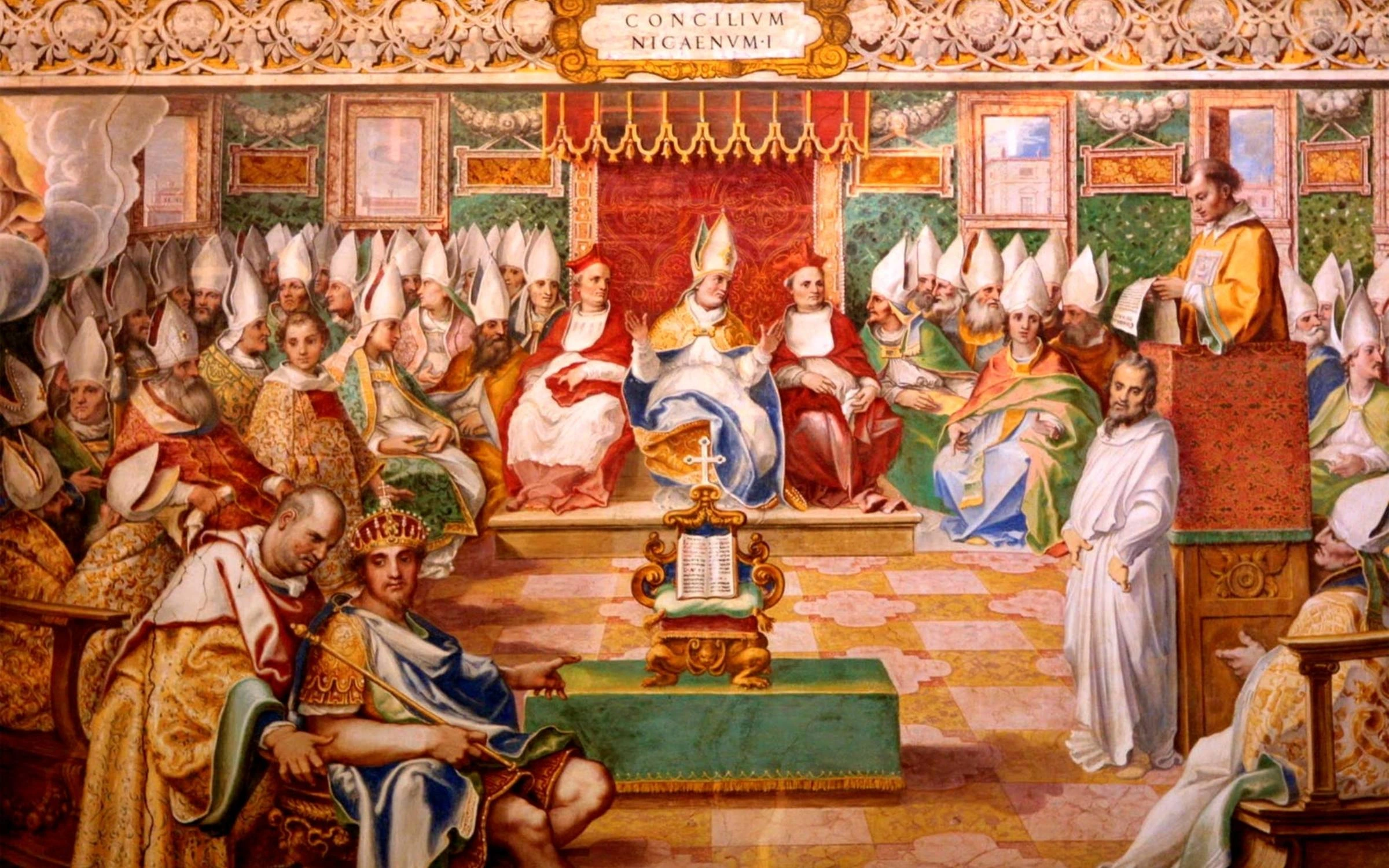
Main Decisions of the Council of Nicaea (325 AD)
The Council of Nicaea stands as one of the most decisive turning points in Christian history. Convened in 325 AD under the authority of the Roman Emperor Constantine I, this historic gathering brought together bishops from across the Christian world to address deep theological divisions and establish unity within the Church.
At a time when Christianity was rapidly spreading throughout the Roman Empire, disagreements over doctrine threatened both religious coherence and political stability. The Council of Nicaea was called not merely as a theological debate, but as a defining moment to clarify belief, authority, and identity for Christianity as a whole.
Defining the Nature of Christ
The most profound decision of the council concerned the nature of Jesus Christ. A central controversy revolved around the teachings of Arius, who argued that Christ was a created being and therefore not fully divine. This view challenged the traditional understanding held by many Christian communities.
After intense debate, the council affirmed that Jesus Christ is of the same essence (homoousios) as God the Father—fully divine, eternal, and not created. This declaration became the cornerstone of orthodox Christian theology and decisively rejected Arianism as incompatible with apostolic faith.
This decision shaped how Christians would understand the identity of Christ for centuries, influencing worship, theology, and the very concept of salvation.
Condemnation of Arianism
Closely linked to the question of Christ’s divinity was the formal condemnation of Arianism. By rejecting Arius’ teachings, the council established clear doctrinal boundaries and defined what constituted orthodox belief versus heresy.
This was not merely a theological judgment; it was an attempt to preserve unity within the Church. By setting a clear standard of belief, the council sought to prevent fragmentation and doctrinal chaos within Christian communities across different regions.
Adoption of the Nicene Creed
One of the most enduring outcomes of the council was the formulation and adoption of the Nicene Creed. This creed provided a unified and authoritative statement of Christian belief, summarizing core doctrines in a concise and formal declaration.
The Nicene Creed articulated belief in one God, the full divinity of Christ, and the foundational elements of Christian faith. It was intended not only as a theological summary but as a unifying confession that could be shared and proclaimed by Christians everywhere.
To this day, the Nicene Creed remains central to Christian worship and identity across Catholic, Orthodox, and many Protestant traditions.
Establishing Church Authority and Structure
Beyond theology, the council addressed issues of church governance and authority. It reinforced the role of bishops as primary leaders within the Church and clarified jurisdictional relationships among major Christian centers.
By formalizing ecclesiastical authority, the council helped transform Christianity from a loosely connected movement into a structured, organized institution. These decisions laid the groundwork for future councils and for the hierarchical organization that would characterize the Church in the centuries to come.
Standardizing the Date of Easter
Another significant decision concerned the celebration of Easter. Prior to the council, Christian communities observed Easter on different dates, often linked to the Jewish calendar. This lack of uniformity caused confusion and division.
The Council of Nicaea established a standardized method for determining the date of Easter, independent of the Jewish Passover. This decision promoted liturgical unity and ensured that Christians across the world would celebrate the resurrection of Christ together.
Why the Main Decisions of Nicaea Still Matter
The main decisions of the Council of Nicaea did far more than resolve disputes of the fourth century. They shaped the theological foundation of Christianity, defined its core beliefs, and established a model for resolving doctrinal conflicts through councils and consensus.
Modern Christian theology, church structure, and liturgical practice all trace their roots back to the decisions made at Nicaea. Whether in theology, history, or religious life, the influence of this council continues to resonate nearly seventeen centuries later.